We used to make great things together
There's a scene in The NeverEnding Story in my reflections of late. The Rock Biter — this enormous, gentle creature made of stone — sits at the edge of a destroyed landscape and says, quietly, "They look like big, strong hands, don't they?" He's talking about his hands. He used them his whole life to build, to carry, to protect. And somehow, despite all of that, he couldn't hold on.
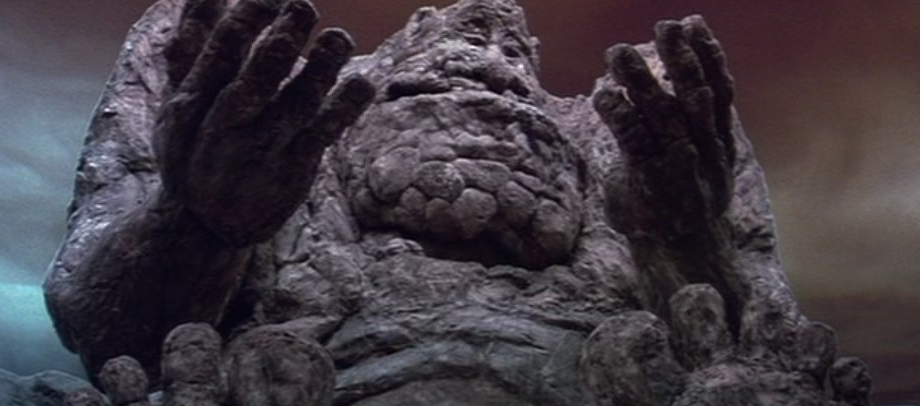
I keep coming back to that image because I think a lot of us are sitting in that same place right now.
Staring at our hands.
Wondering what happened.
We used to make great things together
Not perfectly. Not without our issues. The history of cross-functional product teams is basically a decades-long argument about whose job it is to talk to users, whose job it is to decide what to build, and whose job it is to tell the other two they're doing it wrong (traumatic flashbacks of grooming sessions…). We fought about process and ownership and credit (that thing you launched? Design and research played a role…remember?). We had our turf wars and our org chart casualties.
But somewhere inside all of that mess, we figured out that we needed each other.
I’m going to let that one sound out.
We. Needed. Each. Other.
The best work came from the collision. Designers needed engineers to tell them what was possible and what was fantasy. Product needed designers to translate strategy into something a human being could actually feel. Engineers needed product to stop them from building the right thing for the wrong reason. And all of them — all of us — needed research to walk into the room and say, actually, here's what's really going on with the people we're building for.
It wasn't always graceful. God, sometimes it was incredibly clumsy. But it worked (mostly).
And then…Generative AI.
Here's what I'm watching happen, and I imagine you're watching it too.
Design is looking at the capabilities in front of it and thinking: we've basically been doing product's job for years anyway. We understand users, we define problems, we shape strategy. Why do we need them again?Hell, who needs engineering either? We can just vibe code right into production. No more fights! There's some truth in that.
Product is looking at AI-accelerated prototyping and thinking: we can connect user needs to working experiences faster than ever. Do we really need a dedicated design function? There's some truth in that too.
Engineering — engineering has deep historical receipts to cash in here. They've always made the thing. The actual thing. The thing that runs. And now, with AI-assisted code generation, they can vibe their way through design decisions and ship something that looks fine and works fine and didn't require a single design review or a single product brief. Why wait? Didn’t those other guys always slow us down anyway? There's some truth in that as well.
And research? Research is being told it takes too long. That synthetic users and AI-generated personas can fill the gap. That we can simulate the voice of the customer without the inconvenience of actually talking to one. That the bottleneck is the waiting — the recruiting, the sessions, the synthesis — and that bottleneck can now be prompted away.
This one might be the most dangerous.
Not because the tools aren't real. Some AI-assisted research methods are pretty useful — synthesis acceleration, pattern recognition across large qualitative datasets, smarter screeners. But using synthetic users as a replacement for real humans isn't a research method. It's a sophisticated way of encoding your existing assumptions and calling it validation. It's the founding myth of every product failure in history — we already know what users want — dressed up in enough technical credibility that nobody pushes back in the meeting.
When we automate away the discomfort of learning we're wrong, we don't eliminate the wrongness. We just delay the invoice. And we make it more expensive when it arrives.
It’s lazy. And irresponsible. No convergence of collected data is a replacement for tone, texture, expression, unique scenarios and context, judgement, and the beautiful imperfection that is humanity. And it’s sycophantic. So…do we really only want agreeable inputs? I, for one, always seek out the folks with hate in their hearts to talk to.
We used to make great things together
We're all right. We're all wrong. And we're all, in our own way, doing this year’s version of “my nephew’s pretty good at Photoshop, why do I need you?”.
The tools change. The argument never seems to.
But there's something else at work here — something older and more systemic than any of our individual anxieties. Peter Merholz recently named it in his newsletter, reaching back to a 1983 paper by organizational psychologists DiMaggio and Powell to describe what's driving a lot of this behavior: mimetic isomorphism. You likely see this at work all around you these days — in times of uncertainty, organizations stop asking what's the right thing to do and start asking what are the successful organizations doing, then do that, regardless of whether it applies to their context, their users, or their problems.
Monkey see, monkey do.
It’s everywhere. Companies aren't adopting AI at this pace because they've measured meaningful outcomes (check in with Ed Zitron on that one). They're adopting it because other companies appear to be doing it, and the appearance of success has been mistaken for the substance of it. Token spend per employee as a productivity metric. AI mandates handed down from executives who've long since forgotten what work looks like and likely never watched a user struggle with a screen. The desperate, expensive scramble to check the box, capture the narrative, and demonstrate to someone — investors, boards, competitors, the general vibe of the industry — that we are doing the thing. God forbid we seem irrelevant for not blindly following.
It's dangerously arrogant. It ignores context. And it's not new behavior. The result is a mountain of armchair design — solutions in search of problems, built at speed, pointed at nothing, validated by nobody. An enormous amount of money being lit on fire. And a crazy amount of rework, debt, turnover, and frustration as a result. But hey it looks good, so…let’s ship it? Output theater is still theater. The users in the seats eventually notice.
Where has our nerve gone? When did we stop digging in and fighting for our users? For value?
We used to make great things together
Remember Voltron?
Five lions. Five pilots. Individually capable. Individually limited. Together? Voltron. Defender of the universe. Nothing in the known galaxy could touch it.
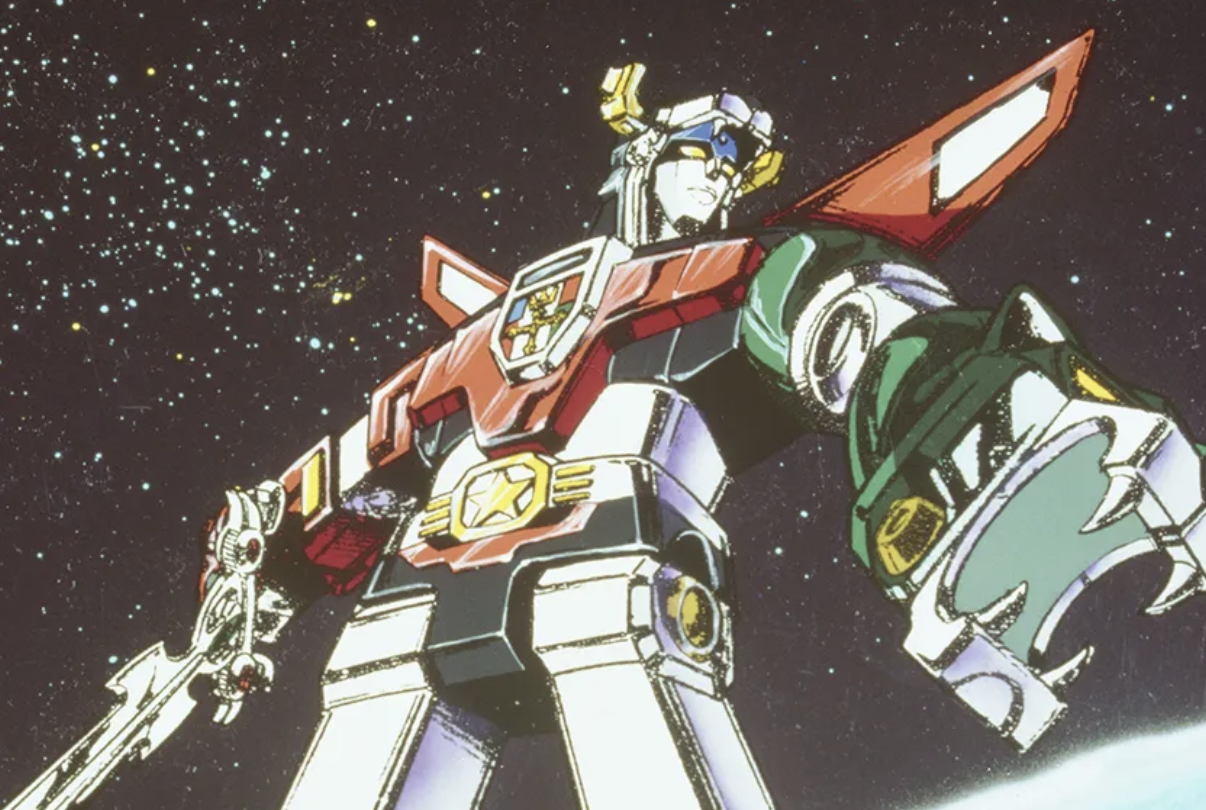
The capabilities we have right now — the AI-assisted research synthesis, the rapid prototyping, the accelerated code generation — these don’t replace the Voltron formation. They're upgrades to each individual lion. Which means the potential of what we make together has never been higher.
But only if we actually combine.
This moment is not permission to invalidate what someone else does. It's not an invitation to eat each other. It's not the long-awaited vindication of the grudge you’ve been carrying. Every function reaching for the AI lever to eliminate the others is just a faster way to make worse things with more confidence.
But it's also not a call to preserve everything. There’s a lot from our old ways of working that deserves to die. Handoffs were slow. Reviews that often were just coordination overhead in disguise. We kept rituals because they were familiar, not because they worked. We don't have to mourn all of that. Some of it needs to go. Some of it should’ve gone long ago.
What we should be fighting to keep — and fighting to evolve — is the collaboration itself. All of us bringing different kinds of intelligence and experience and expertise and perspective to bear on the same problem at the same time.
And here's what that can look like when we go that route:
Designers who aren't drowning in delivery doing what design was always supposed to do — getting upstream of the problem, shaping the question before anyone starts answering it, bringing the texture of human experience into rooms where it's usually missing. Not pushing pixels under deadline pressure (you can have that, robots and agencies). Thinking. Framing. Provoking.
Product managers freed from backlog grooming doing the connective tissue work nobody else does — holding the tension between what users need, what the business can sustain, and what's possible to build, and making that tension legible to everyone in the room.
Engineers free from the most tedious parts of implementation getting curious earlier. Being in the problem space conversations, not just the solution space ones. Saying "I know how this material behaves, and that changes what's worth building" before anyone has written a line of code.
Researchers who aren't spending weeks on recruitment and transcription spending that reclaimed time on the parts of the work that actually require a human brain — asking the questions nobody thought to ask, noticing the things that don't fit the pattern, holding the team accountable to the lived reality of the people we're building for. AI can help synthesize what you heard. It cannot replace the act of listening.
The double diamond didn't become obsolete, despite what certain design leaders from certain AI platforms who definitely aren’t just trying to sell you something would have you believe. It got better tools at every stage. Faster prototypes that exist to learn, not to ship. Research that's leaner without being synthetic. Design and engineering conversations that happen in parallel rather than in sequence. The question is whether we're willing to use those tools together.
“This moment is not permission to invalidate what someone else does. It’s not an invitation to eat each other.”
I, too, have a childlike wonder about what the future holds. I look at what people are doing with these capabilities and I see my favorite sci-fi fantasies becoming tangible and near. I feel genuine awe. I am not immune to the excitement, and I wouldn't want to be.
But I got into this to serve. To help people help people. That's my North Star — has been from the start. Design is an act of service. It was never about one-upmanship. It was never about “number-go-up” rot economy insanity. It was about solving real problems for real people. Sure, it's also about connecting human context to business objectives — we're not helping anyone if the doors are closed — but when we choose us over them, we're doing it wrong. When we lose sight of the point of all this and get lost in the tooling and the competing and the cannibalism, we've lost the plot, friends.
Just because AI can do something or we can do something with it, doesn’t mean we should.
It’s a material. Like wood, steel, code before it — each one revolutionary in its moment, each one eventually understood as a thing with properties and limits and the right applications and the wrong ones. Nobody asks whether concrete is going to replace the architect. The architect decides where concrete belongs and where it doesn't, and uses that decision in service of something larger than the material itself.
This is no different. It has properties. Remarkable ones. But don’t let the possibility of what it can do distract you from why we’re creating solutions in the first place. Who we’re creating them for. And who we’re creating them with.
Don’t obliterate decades of hard-fought battles to build these relationships over this.
We used to make great things together
And that's what this has always been about. Not processes or org charts or who owns the roadmap. Relationships. The ones between disciplines. The ones between teams and the people they serve. The ones we're now being asked to form with something genuinely new.
The magic of cross-functional product work was never the framework. It was the relationships that frameworks were trying to protect — the trust built across late design reviews and tense sprint demos and research readouts that changed everything. The shorthand that develops between a designer and an engineer who've shipped together. The way a great researcher can walk into a room and make a team feel accountable to the human they'd been abstracting away.
That relational intelligence is not obsolete. It is not automatable. It is, if anything, the thing that determines whether any of this — the AI, the speed, the capability — gets pointed at something worth making.
The potential in front of us isn't just faster execution. It's the possibility of working in new and different ways. Of learning together in real time. Of serving people we've struggled to reach before, in ways we haven't figured out yet. Of solving problems that used to be too slow, too expensive, too complex to touch.
But only if we do it together. Only if we resist the mimetic pull toward output theater and the cannibalistic instinct to eliminate rather than evolve. Only if we remember that the relationships — between disciplines, between teams, between us and the people we serve — are not the inefficiency. They are the point.
The Rock Biter's hands were always strong enough. The problem wasn't the hands. The problem was that he faced it alone.
We don't have to.